


Table of Contents
Introduction to Extended Reality in Construction
The construction industry is undergoing a digital transformation, and at the center of this evolution is extended reality in construction. As projects grow more complex and margins become tighter, construction companies are increasingly adopting immersive technologies to improve accuracy, collaboration, and efficiency. Extended reality constructionsolutions—covering virtual, augmented, and mixed reality—are redefining how buildings are designed, planned, and executed.
Extended reality enables construction stakeholders to visualize projects before breaking ground, detect design conflicts early, train workers safely, and streamline on-site operations. From architects and engineers to contractors and project managers, XR-powered workflows are becoming essential across the construction lifecycle. As a forward-thinking XR company, Quantile Tech delivers scalable extended reality solutions that help construction firms reduce risks, control costs, and deliver projects with confidence.
Why Extended Reality Construction Matters
Extended reality in construction is an umbrella term that includes virtual reality (VR), augmented reality (AR), and mixed reality (MR), all working together to create immersive and interactive construction environments. Unlike traditional digital tools, extended reality construction solutions allow professionals to step inside designs, overlay digital data onto physical sites, and interact with 3D models in real time.
The relevance of extended reality in construction lies in its ability to bridge the gap between design intent and on-site execution. Misinterpretation of drawings, coordination errors, and late-stage rework are common challenges in construction projects. By using extended reality in construction, teams gain a shared visual understanding, leading to better alignment and faster decision-making.
Construction firms working with an experienced XR company like Quantile Tech can integrate extended reality tools into BIM workflows, project planning, and field operations. This not only improves productivity but also enhances transparency among stakeholders, investors, and regulatory bodies.
Extended Reality in Construction Design and Planning
Design and planning are critical phases where mistakes can be costly. Extended reality construction solutions empower architects and engineers to visualize structures at full scale before construction begins. Through immersive walkthroughs, teams can experience spatial layouts, lighting conditions, material choices, and structural elements in a realistic environment.
With extended reality in construction, design teams can identify clashes between architectural, structural, and MEP components early in the process. This proactive approach significantly reduces design conflicts that often lead to delays and budget overruns. Stakeholders can review designs collaboratively, regardless of their physical location, ensuring faster approvals and fewer revisions.
As an innovative XR company, we develop extended reality platforms that integrate seamlessly with existing design tools. These solutions enable real-time feedback, interactive design reviews, and accurate visualization—helping construction projects move from concept to execution with clarity and precision.
Extended Reality Construction for On-Site Execution and Monitoring
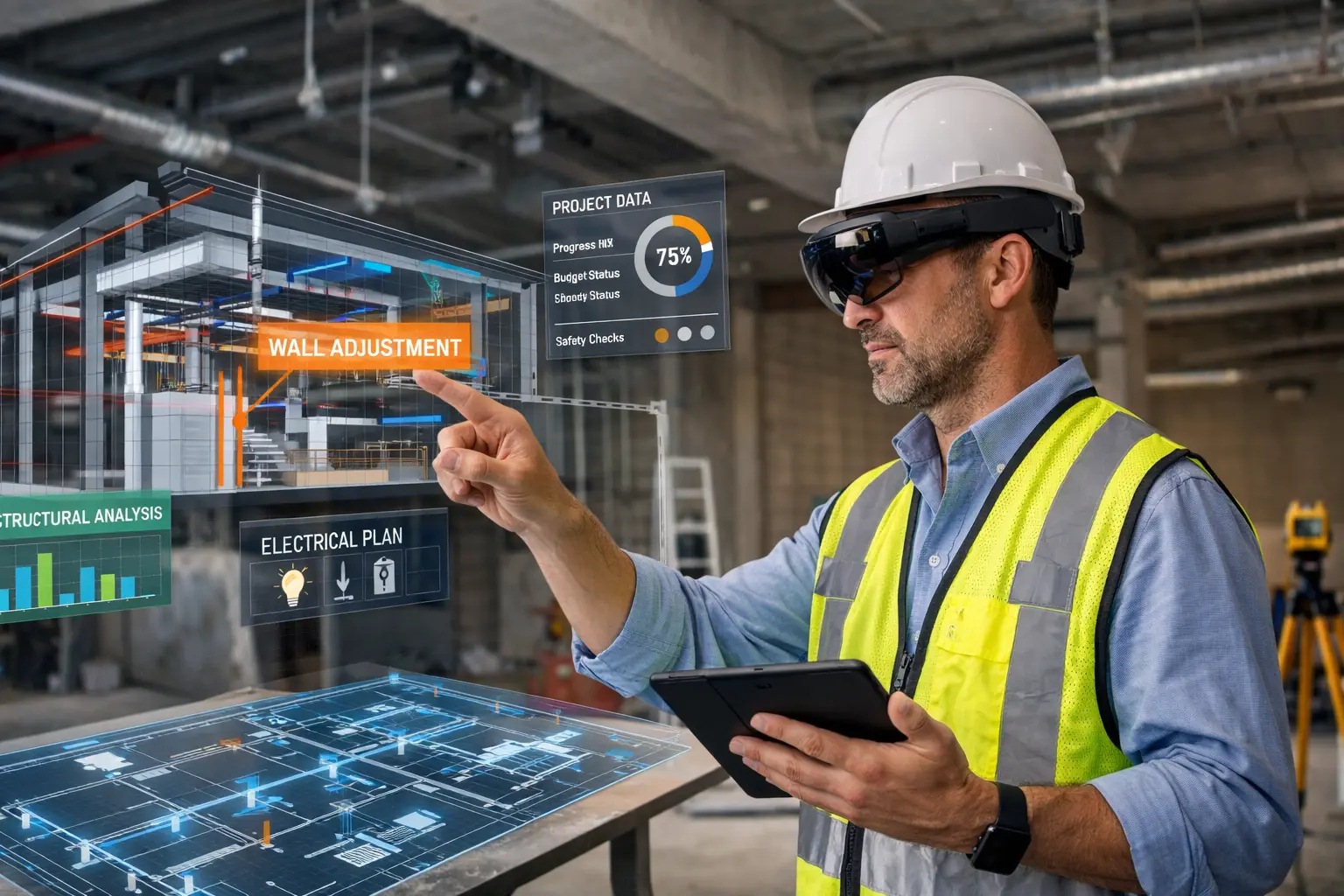
The impact of extended reality in construction extends beyond planning into active construction sites. AR-powered extended reality solutions allow site teams to overlay digital models directly onto physical environments. This ensures accurate placement of structural components, utilities, and systems according to design specifications.
By using extended reality construction tools, supervisors can compare real-time progress against digital models, identify deviations, and resolve issues immediately. This reduces rework and enhances quality control throughout the construction phase. Additionally, extended reality enables remote experts to assist on-site teams, minimizing travel costs and downtime.
Extended reality also improves coordination between trades, ensuring that everyone works from a single source of truth. Quantile Tech, as a trusted XR company, provides construction-grade extended reality systems that support field operations, site inspections, and real-time progress validation.
Extended Reality in Construction Safety and Workforce Training
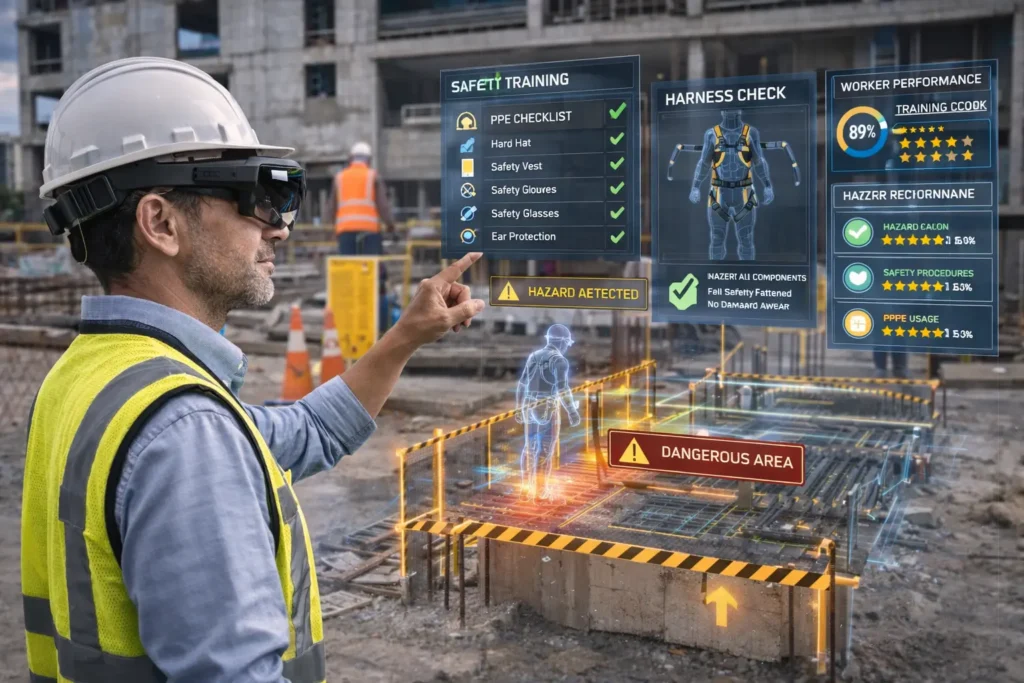
Safety remains one of the biggest concerns in construction, and extended reality in construction is transforming how safety training is delivered. Instead of relying solely on manuals or classroom sessions, workers can train in immersive environments that replicate real-world hazards without physical risk.
Extended reality construction simulations allow workers to practice equipment handling, emergency response, and safety protocols in controlled virtual environments. This hands-on experience significantly improves retention and preparedness, leading to safer job sites. New hires can be trained faster, while experienced workers can refresh their skills through scenario-based learning.
An advanced XR company designs extended reality training modules tailored to construction roles and site-specific risks. By integrating extended reality into safety programs, construction firms reduce accidents, improve compliance, and foster a culture of safety across projects.
Extended Reality in Construction Collaboration
Construction projects involve multiple stakeholders, including architects, engineers, contractors, owners, and consultants. Extended reality in construction enhances collaboration by creating shared immersive environments where teams can review and discuss projects in real time.
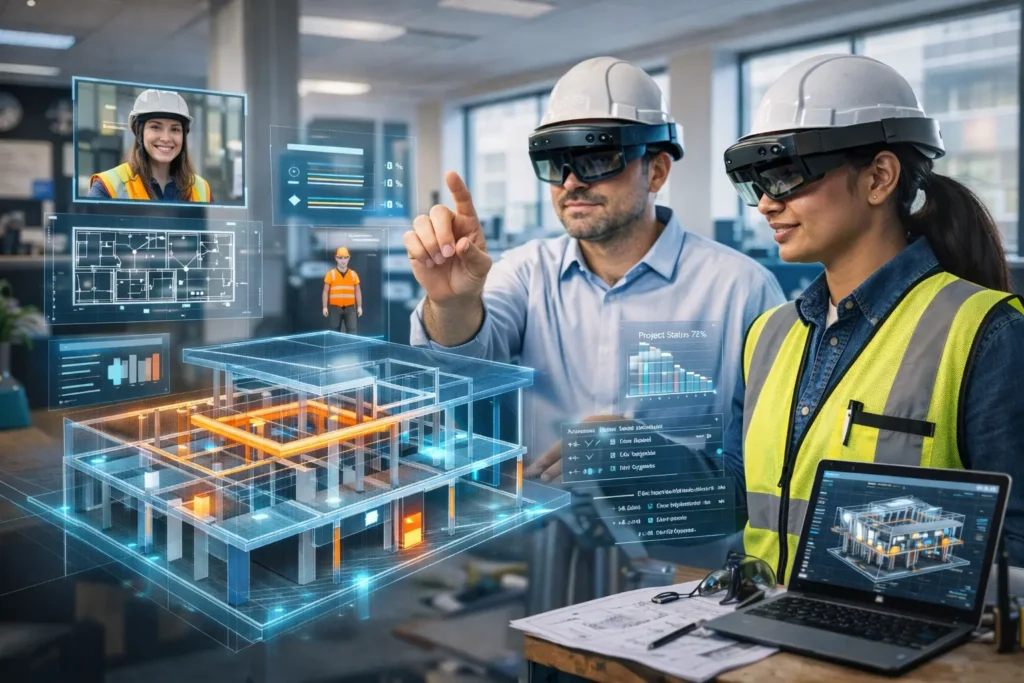
With extended reality construction, geographically dispersed teams can meet inside virtual models, explore designs together, and resolve issues collaboratively. This eliminates communication gaps caused by 2D drawings or fragmented data. Decision-making becomes faster and more informed, improving overall project outcomes.
As an experienced XR company, we build collaborative extended reality platforms that support multi-user interactions, real-time annotations, and seamless data sharing. These capabilities help construction teams stay aligned, even on large and complex infrastructure projects.
Why Extended Reality Construction Is the Future of the Industry
The adoption of extended reality in construction is accelerating as companies recognize its long-term value. From improving design accuracy and reducing rework to enhancing safety and collaboration, extended reality construction delivers measurable business impact.
As construction projects become more complex and timelines more demanding, traditional methods alone are no longer sufficient. Extended reality provides the immersive insights and operational efficiency required to meet modern construction challenges. Companies that invest early in extended reality gain a competitive advantage by delivering higher-quality projects faster and more cost-effectively.
Quantile Tech, a leading XR company, continues to push innovation in extended reality solutions for construction. By combining technical expertise with in-depth industry understanding, we empower construction firms to adopt digital transformation with confidence.
Conclusion: Embracing Extended Reality in Construction
Extended reality in construc tion is no longer a future concept—it is a practical, proven technology reshaping how the industry operates. From design and planning to execution, safety, and collaboration, extended reality construction solutions bring clarity, efficiency, and control to every project stage.
As the demand for smarter, safer, and more efficient construction grows, extended reality will play a central role in driving innovation. Partnering with an experienced XR company like Quantile Tech ensures that construction organizations can unlock the full potential of extended reality, deliver better outcomes for stakeholders, and set new standards for the industry.