


Table of Contents
Overview of the Types of Virtual Reality in Today’s Digital World
Virtual reality has evolved from a futuristic concept into a powerful technology shaping how businesses, educators, and consumers interact with digital environments. Today, virtual reality is no longer limited to gaming or entertainment; it plays a crucial role in training, design, healthcare, education, and enterprise innovation. To fully understand its impact, it is important to explore the types of virtual reality and how each one functions in real-world scenarios.
Different organizations adopt different types of virtual reality based on their goals, budget, and use cases. From simple simulations to fully immersive digital worlds, each type of virtual reality delivers a unique level of interaction and realism. As a trusted virtual reality company, we build scalable virtual reality solutions that align these technologies with practical business and industry needs.
Non-Immersive Virtual Reality: Foundational Types of Virtual Reality
Non-immersive virtual reality represents the most basic form among the types of virtual reality. In this setup, users interact with a digital environment through a screen, such as a computer or tablet, without being fully surrounded by the virtual world. The real environment remains visible, and the user’s engagement is limited to mouse, keyboard, or touch-based interactions.
This type of virtual reality is widely used because it is cost-effective and easy to deploy. Many early virtual reality solutions started with non-immersive systems, especially in business applications where full immersion was not necessary. For example, architectural firms often use non-immersive virtual reality to display 3D building models on large screens. Users can rotate, zoom, and explore designs while discussing them collaboratively.
In the education sector, non-immersive virtual reality enables virtual labs and simulations that run on standard computers. Students can explore chemical reactions, mechanical systems, or historical reconstructions without specialized hardware. In retail and e-commerce, this type of virtual reality allows customers to view products in 3D, customize features, and visualize layouts before making purchasing decisions.
As a virtual reality company, we develop non-immersive virtual reality solutions for organizations seeking practical, scalable entry points into virtual reality adoption. While it may offer lower realism than other types, non-immersive virtual reality remains essential due to its accessibility and versatility.
Semi-Immersive Virtual Reality: Interactive Virtual Reality Solutions
Semi-immersive virtual reality bridges the gap between basic interaction and full immersion, making it one of the most widely adopted different types of virtual reality. This approach uses large screens, curved displays, projection systems, or simulators to partially immerse users in a virtual environment while still maintaining some awareness of the real world.
One of the most common real-world examples of semi-immersive virtual reality is flight simulation. Pilots train using cockpit replicas surrounded by large digital displays that simulate real-world flying conditions. These virtual reality solutions allow trainees to practice navigation, emergency procedures, and decision-making without the risks associated with real aircraft.
In engineering and manufacturing, semi-immersive virtual reality is used for equipment training and process simulation. Operators can interact with machinery models, understand workflows, and identify potential issues before working on actual equipment. This type of virtual reality improves safety and reduces operational errors.
Museums and experience centers also rely on semi-immersive virtual reality to create interactive exhibits. Visitors engage with large-scale digital environments that respond to movement and input, enhancing learning and engagement without the need for head-mounted displays.
Quantile Tech, as a forward-thinking virtual reality company, delivers semi-immersive virtual reality solutions tailored for training, visualization, and simulation. These solutions balance realism with usability, making them ideal for organizations that require immersion without complete sensory isolation.
Fully Immersive Virtual Reality: Advanced Types of Virtual Reality Experiences
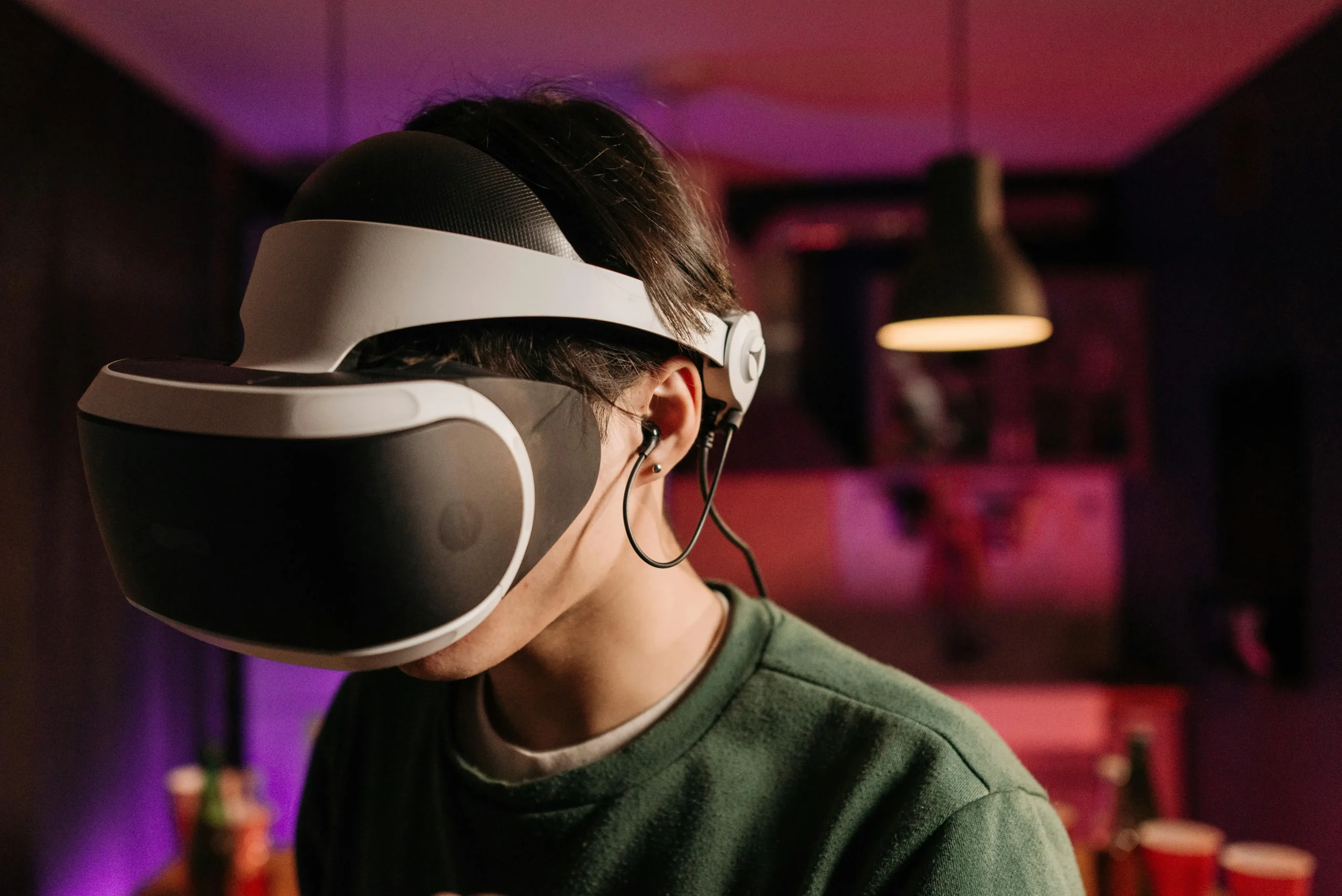
Fully immersive virtual reality is the most advanced among the types of virtual reality, offering complete sensory immersion. Users wear head-mounted displays (HMDs), use motion controllers, and sometimes haptic devices to interact with a fully digital environment that replaces the physical world entirely.
This type of virtual reality is widely recognized for its ability to create highly realistic experiences. In the healthcare industry, fully immersive virtual reality enables surgeons to practice complex procedures in risk-free environments. Medical trainees can rehearse operations repeatedly, improving skill retention and confidence. These virtual reality solutions have proven effective in reducing training errors and improving patient outcomes.
In the defense and security sectors, fully immersive virtual reality is used for combat simulations, mission rehearsals, and tactical training. Soldiers and security personnel can experience high-pressure scenarios that replicate real-world conditions, helping them develop situational awareness and decision-making skills.
The entertainment industry has also embraced fully immersive virtual reality. VR gaming, virtual concerts, and interactive storytelling experiences rely heavily on this type of virtual reality to deliver emotional engagement and realism. Users can explore virtual worlds, interact with characters, and influence narratives in ways not possible through traditional media.
Quantile Tech designs fully immersive virtual reality solutions that integrate high-performance hardware with custom software environments. As a specialized virtual reality company, we focus on delivering immersive experiences that align with enterprise training, simulation, and experiential engagement needs.
Collaborative Virtual Reality: Multi-User Types of Virtual Reality
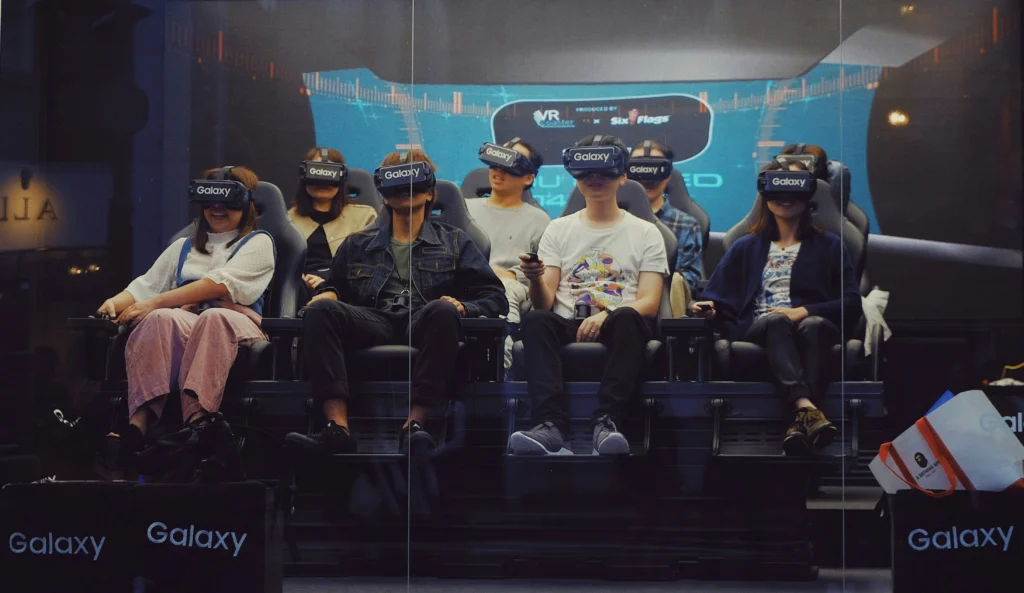
Collaborative virtual reality focuses on shared digital spaces where multiple users interact simultaneously. This category is increasingly recognized as one of the most impactful different types of virtual reality, especially in business and enterprise applications. Users can join virtual environments from different physical locations and collaborate in real time.
In corporate environments, collaborative virtual reality supports virtual meetings, design reviews, and remote teamwork. Teams can interact with 3D models, brainstorm ideas, and solve problems together within a shared virtual space. These virtual reality solutions enhance communication by providing spatial context and visual clarity beyond traditional video conferencing.
In architecture and construction, collaborative virtual reality enables stakeholders to walk through virtual buildings together. Architects, engineers, and clients can review designs, suggest changes, and resolve conflicts early in the project lifecycle. This reduces costly rework and accelerates decision-making.
Education and training also benefit from collaborative virtual reality. Instructors and learners can interact in virtual classrooms, conduct group simulations, and engage in experiential learning regardless of geographic location. This type of virtual reality supports global collaboration and scalable learning models.
Quantile Tech develops collaborative virtual reality solutions that prioritize performance, security, and seamless multi-user interaction. As a trusted virtual reality company, we enable organizations to unlock the full potential of shared virtual environments.
Augmented and Hybrid Virtual Reality: Expanding the Types of Virtual Reality
Augmented and hybrid virtual reality combines elements of physical and digital environments, expanding the scope of types of virtual reality. While augmented reality overlays digital content onto the real world, hybrid systems integrate virtual elements more deeply into physical spaces, creating blended experiences.
In retail, augmented virtual reality solutions allow customers to visualize products within their real environment. Furniture placement apps and virtual try-ons are practical examples where digital objects enhance physical decision-making. These virtual reality solutions improve customer confidence and reduce returns.
In industrial and field operations, hybrid virtual reality supports maintenance, inspection, and training. Technicians can receive real-time instructions, 3D overlays, and data visualizations while working on physical equipment. This improves accuracy and reduces downtime.
Education and training institutions use augmented virtual reality to create interactive learning environments. Students can explore digital models layered onto physical classrooms, making abstract concepts easier to understand.
Quantile Tech builds hybrid virtual reality solutions that merge physical and digital workflows seamlessly. As an innovative virtual reality company, we ensure these solutions enhance productivity, learning, and engagement across industries.
Conclusion: Choosing the Right Types of Virtual Reality for Real-World Impact
Understanding the types of virtual reality is essential for organizations looking to adopt immersive technologies effectively. Each type—non-immersive, semi-immersive, fully immersive, collaborative, and hybrid—offers unique benefits suited to specific use cases. The key lies in selecting the right virtual reality approach based on goals, audience, and operational requirements.
As virtual reality continues to evolve, businesses that invest in the right virtual reality solutions gain a competitive advantage through improved training, better decision-making, and enhanced user engagement. Partnering with an experienced virtual reality company ensures that these technologies are implemented strategically and sustainably.
Quantile Tech stands at the forefront of this transformation, delivering tailored virtual reality solutions across industries. By leveraging the different types of virtual reality effectively, organizations can unlock new possibilities and drive meaningful real-world outcomes.